

How to Enter the Colombian Market as a Foreign Manufacturer of INVIMA-Regulated Products
A foreign manufacturer needs three things to sell in Colombia: a sanitary authorization from INVIMA, a license holder domiciled in the country, and a technical dossier that sustains that authorization throughout the product's commercial life. Here is the roadmap.
To sell an INVIMA-regulated product in Colombia — a medical device, a cosmetic, or a home care and hygiene product — a foreign manufacturer needs three things: a sanitary authorization from INVIMA, a license holder legally domiciled in Colombia, and a complete technical dossier that sustains that authorization throughout the product's entire commercial life.
What typically stalls a market entry is not the filing itself, but everything that went unresolved before the filing: correct product classification, who will hold the authorization, and what documentation the Colombian framework actually requires. Below we explain the roadmap, and why the judgment of a local partner reduces both friction and risk.
What You Need to Understand Before Entering Colombia
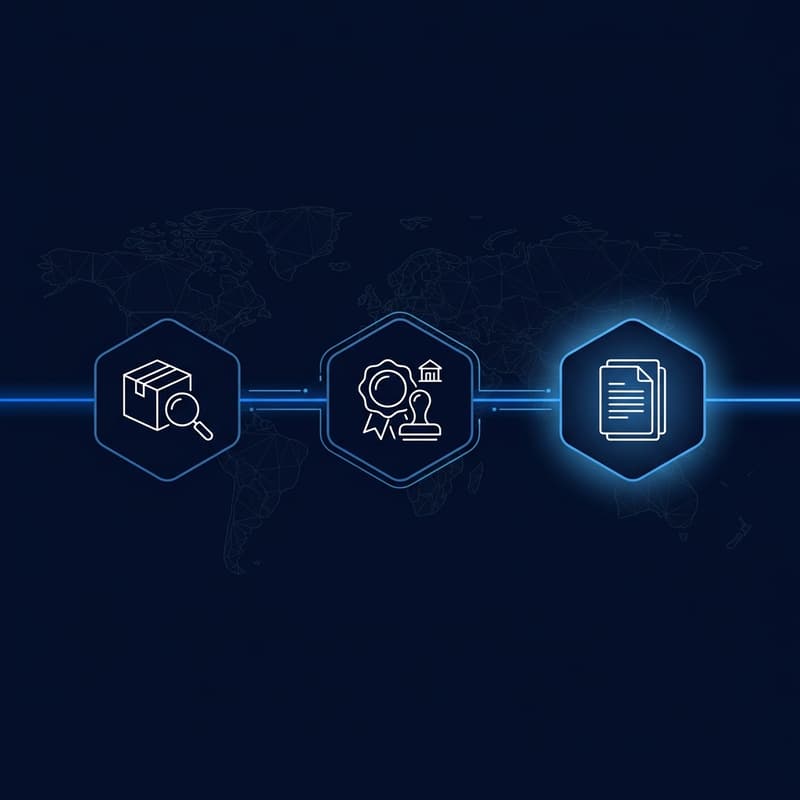
A foreign manufacturer cannot commercialize directly in Colombia. The sanitary authorization is held by a legal entity domiciled in the country, and the applicable route depends on how your product is classified.
Three decisions are made before any application is filed:
1. Category and sanitary instrument. The type of authorization changes with the product. Medical devices are governed by Decree 4725 of 2005, which establishes the sanitary registration regime and classifies products by risk level. Cosmetics operate under a supranational framework — Andean Community Decision 516 — through a Mandatory Sanitary Notification (NSO). Home care and hygiene products follow their own sanitary regime. Misclassifying a product at the outset is the single most common cause of avoidable delays and deficiency notices.
2. Who will be the license holder. The authorization is issued in the name of a legal entity in Colombia — typically the importer or an authorized license holder. Deciding this late forces the dossier to be rebuilt.
3. The real condition of your source documentation. Certificates, ISO records, technical data sheets, and labeling are almost never ready "as is" for Colombia. They should be audited against the local requirement before filing, not after.
The Role of INVIMA and the Local Regulatory Framework
INVIMA is Colombia's national health authority: it authorizes and supervises the products under its jurisdiction. Without its authorization, a regulated product cannot be legally commercialized in the country.
Its role does not end once a product is authorized. INVIMA also supervises the market — the post-market stage — evaluates modifications made to the product, and verifies that authorizations remain valid.
For a foreign manufacturer, this has two very practical implications:
- Market entry is a regulatory project with formal requirements, not a generic import permit.
- Once inside the market, obligations continue: renewals, reporting of modifications, and post-market surveillance.
The regulatory framework is periodically updated. It is therefore worth planning your market entry with current local guidance and confirming the requirements applicable to each product at the official source (invima.gov.co).
Technical and Documentary Information Worth Preparing
The dossier is built on technical and legal documentation. It either arrives complete, or it arrives at a deficiency notice. Preparing source material from the outset is the single factor that shortens the route the most.
These are the documents typically required, with variations depending on the product category:
- Certificate of Free Sale (CFS) issued in the country of origin.
- Manufacturer quality certificates — for example, ISO 13485 for medical devices, or the standard applicable to the category.
- Technical data sheet, composition, or specifications, depending on the category.
- Labeling, artwork, and instructions for use, adapted to the Colombian requirement: Spanish language and mandatory information.
- Legal documentation of the license holder or importer in Colombia.
Before filing, this documentation should be reviewed to identify gaps against what INVIMA requires. Closing a gap before filing is always cheaper than answering a deficiency notice afterwards.
Importer, License Holder, Quality, and Regulatory Strategy
A foreign manufacturer cannot be the direct holder of the sanitary authorization: it must be issued to an entity domiciled in Colombia — or, for cosmetics under CAN regulations, within the Andean Community framework. That holder can be the importer, a subsidiary of your own, or Vexpro acting as the local holder. The decision defines control, liability, and portfolio continuity — which is why it should never be made in isolation.
Four pieces are arranged together:
| Piece | What it defines |
|---|---|
| Importer | Who imports the product and bears commercial responsibility for it. |
| License holder | In whose name the sanitary authorization is issued and, therefore, who holds regulatory control of the product. |
| Quality | Which system and which certifications sustain the dossier and subsequent surveillance. |
| Regulatory strategy | Filing sequence, classification, and how the portfolio will be maintained: renewals, changes, and post-market obligations. |

Resolving these four pieces in a coordinated way avoids the most expensive scenario of all: entering fast with a structure that later has to be rebuilt.
How a Local Partner Reduces Friction and Risk
A local partner reduces friction because it translates the Colombian framework into concrete decisions and takes over the regulatory operation — without the manufacturer having to build an in-country department of its own.
Vexpro operates as your regulatory division in Colombia — a regulatory BPO model — with 18 years supporting domestic and international companies before INVIMA across medical devices, cosmetics, and home care and hygiene products. That means a single team that classifies the product, prepares the dossier, files it, maintains the portfolio (expirations, changes, deficiency notices), and contributes local technical judgment.
We do not promise INVIMA decisions or timelines. We work to eliminate the delays that are within our control: incorrect classifications, incomplete dossiers, and unanswered deficiency notices.
You can review our scope in regulatory affairs, or the specific route for your category in medical devices, cosmetics, and home care and hygiene.
Frequently Asked Questions
Do I need my own company in Colombia to sell my product? No. The authorization must be issued to an entity domiciled in Colombia, but that entity can be your importer, a subsidiary of your own, or Vexpro acting as the local license holder. For foreign companies without a Colombian subsidiary, that last option is usually the most direct route.
Which comes first: the importer or the registration? They are defined together. License holder and importer are decided as part of the regulatory strategy before filing, because they determine in whose name the authorization is issued and who is accountable for the portfolio.
How long does it take to enter the Colombian market? It depends on the product category, its classification, how complete the dossier is, and the deficiency notices raised during evaluation. We do not promise a fixed INVIMA timeline; we work to eliminate avoidable delays.
Do all products follow the same route? No. The sanitary instrument changes with the category: medical devices, cosmetics, and home care and hygiene products follow different routes. The correct instrument is confirmed during classification.
What documents do I need to get started? Typically the certificate of free sale, manufacturer quality certificates, the technical data sheet, labeling and instructions for use, and the legal documentation of the license holder or importer. We run an initial review to tell you exactly what is missing.
What happens after the product is authorized? The authorization has to be maintained: renewals before expiration, modifications when the product or the manufacturer changes, and post-market obligations. An expired or non-compliant authorization does not permit commercialization.
The Next Step
Are you evaluating entry into the Colombian market, or do you already have a product under review by INVIMA?
Let's start with a regulatory feasibility conversation: we review your product, its classification, and the cleanest route to enter and stay compliant.
Schedule a regulatory feasibility conversation
Last updated: July 10, 2026. This content is general information and does not constitute product- or company-specific regulatory advice. Official source: INVIMA (invima.gov.co).